

Compact Soft Cooler
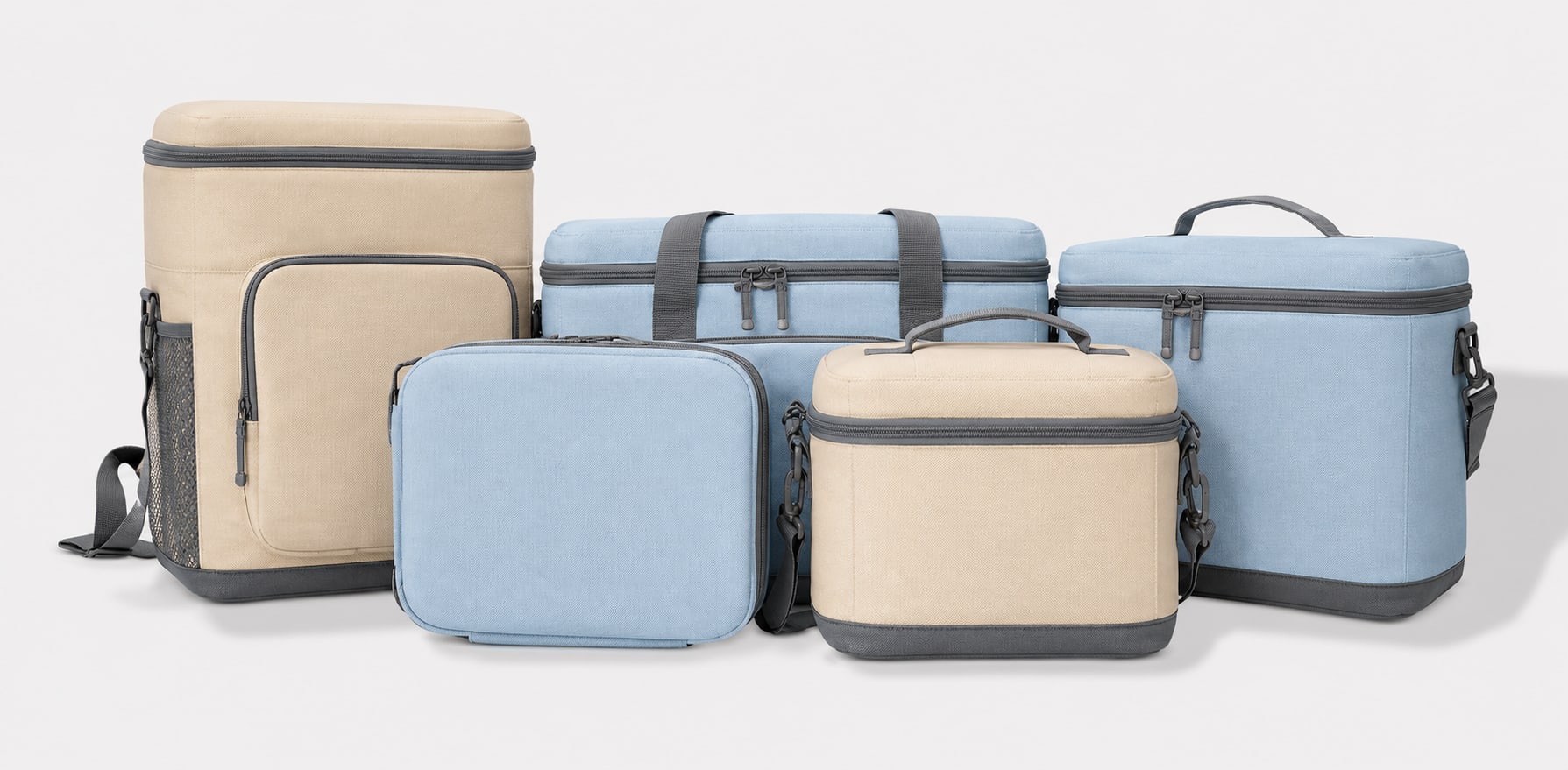
Discuss a compact format for a defined drink or container load. Balance opening access, handle comfort and insulation bulk against the packed size; the existing image is an illustrative format reference.
Discuss the formatFunctional carry · custom development
Develop cooler bags around the contents, journey and cleaning routine. Review lining, insulation, seams and closures together, and define payload, temperature and duration before evaluating thermal or leak performance.
Discuss This ProductStart with the intended use. Quantity, timing and materials can still be undecided.
01 · Intended use
02 · Formats to develop
Discuss a compact format for a defined drink or container load. Balance opening access, handle comfort and insulation bulk against the packed size; the existing image is an illustrative format reference.
Discuss the format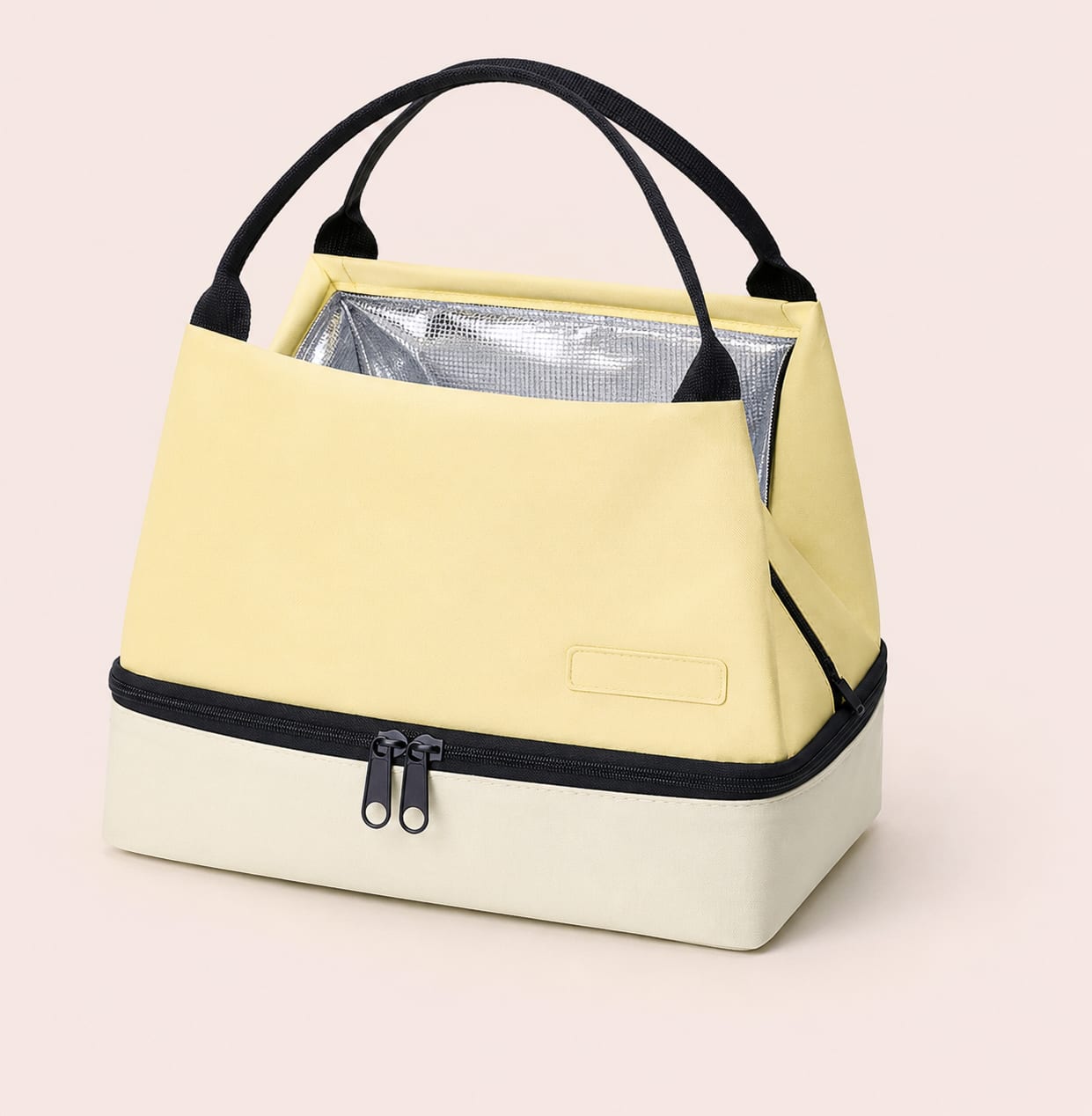
Explore an everyday lunch or thermal-tote brief with a lining that can be reached for cleaning. Confirm container fit, upright carrying and closure layout rather than assuming the pictured bag's internal construction.
Discuss the formatConsider related sizes for a retail collection, sharing colour and branding direction. Each size needs its own payload and construction review; a common appearance does not establish equivalent temperature performance.
Discuss the format03 · Customisation
Specify the essential functions first. Material availability, construction and budget determine which options are feasible.
04 · Materials & construction
These are design choices to evaluate during development, not automatic features or performance guarantees.
05 · Development checkpoints
Illustrative development discussion — not a completed customer project or verified test result.
This is not an actual Liora project or validated sample. Existing images illustrate format directions only. Proposed checkpoints: brief review produces a payload-and-use specification; construction review produces a layer and seam proposal; sample review would produce fit, cleaning-access and leak-path observations. Any agreed thermal evaluation would document ambient temperature, starting payload temperature, payload quantity, ice-pack arrangement, opening frequency and duration alongside observations for buyer review. No completed tests, lab reports or guaranteed cold-retention hours are claimed.
Discuss sample checks, records and acceptance conditions06 · MOQ & sampling
Typical carry MOQ is 300 pieces per style per colour. Discuss quantities by size and colour before selection; material availability and construction affect feasibility. Smaller pilots are only considered following a feasibility review, not automatically available.
Start with container dimensions, intended contents and cleaning expectations. Agree a proposed sample scope, review criteria, timing and cost before proceeding. Fit, insulation stack and seam decisions should be recorded before approval; visual acceptance alone does not validate thermal or leak performance.
07 · Before you brief
Specify ambient temperature, payload type and quantity, starting temperature, ice packs and duration. Agree measurement points and an acceptance threshold before evaluation; avoid a universal cold-retention-hours claim.
No. Cleaning access and liquid containment are separate decisions. Review seam paths and closures, then agree a spill quantity, orientation and duration for assessment of the proposed construction.
08 · Start the project
Your category is carried into the existing project form. Liora reviews the intended use, practical construction options and information needed for the next step.